
Why Oliver Glasner’s Inevitable Crystal Palace Exit Will Be Defined More by the Fallout Than the Date He Leaves

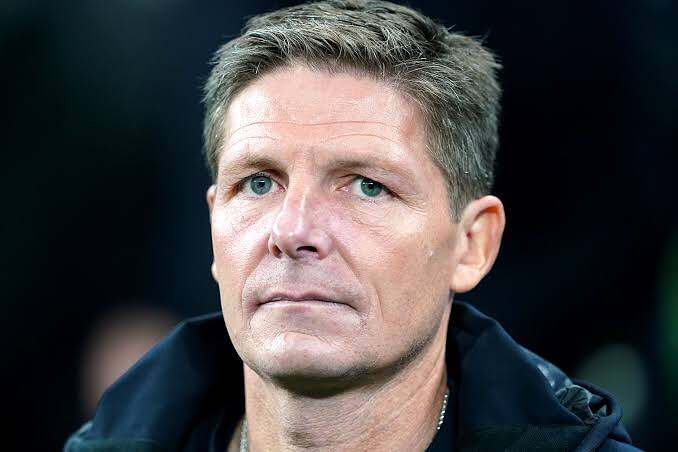
Let us pose a pivotal inquiry: for how extended a period can Crystal Palace genuinely anticipate retaining the services of Oliver Glasner as their head coach?
Furthermore, a second pertinent question arises: what will be the true impact or consequence of his eventual departure?
The immediate and conventional responses to these queries are often presumed to be, respectively, ‘likely not for an extensive duration’ and ‘undeniably profoundly significant.’
However, we find ourselves harboring a degree of skepticism, particularly concerning the latter assertion regarding the magnitude of his importance in the long term.
It is unequivocally evident that under Glasner’s leadership, Crystal Palace is performing remarkably, often exceeding historical expectations and elevating their competitive standing.
His tenure has been marked by unparalleled success, culminating in what many consider the club’s most triumphant moment – a prestigious FA Cup victory in May – which capped off their most successful campaign to date within the Premier League.
Trending

Despite facing considerable challenges, such as the departure of key talents like Michael Olise in his inaugural summer and Eberechi Eze in his second, Glasner has navigated these significant player exits with a seemingly uncomplicated proficiency, maintaining performance levels.
It is precisely this demonstrated capacity for continuous development and seamless adaptation under his guidance that leads us to surmise that Crystal Palace could be perfectly well-equipped to prosper even in an era following his stewardship.
Ultimately, the critical determinants for the club’s future trajectory will reside not in his mere absence, but rather in the specific manner of his eventual relinquishment of the role, and, crucially, the strategic decisions and immediate actions taken by the club’s hierarchy thereafter.
Crystal Palace has firmly established itself as an attractive destination for promising players, effectively positioning the club as a crucial developmental stage or a springboard to achieve ultimate success at the pinnacle of the sport.
We’ve witnessed this trajectory with Michael Olise, who is now thriving at Bayern Munich, and Eberechi Eze, who has ascended to Arsenal.
This function as a talent showcase is a well-understood and deeply ingrained aspect of existence for football clubs operating outside the financial and reputational stratosphere of the Premier League’s perennial contenders.
It provides an invaluable platform, a veritable display window, for individuals to demonstrate their capabilities and prove their mettle within what is widely regarded as the most demanding and profoundly competitive league across the globe.
Clubs such as Bournemouth, Brighton, and numerous others have navigated this intricate strategic landscape with exceptional proficiency, mirroring the expertise Crystal Palace now exhibits.
However, a marked difference emerges when considering managerial careers; this upward progression is far less frequently discussed or acknowledged.
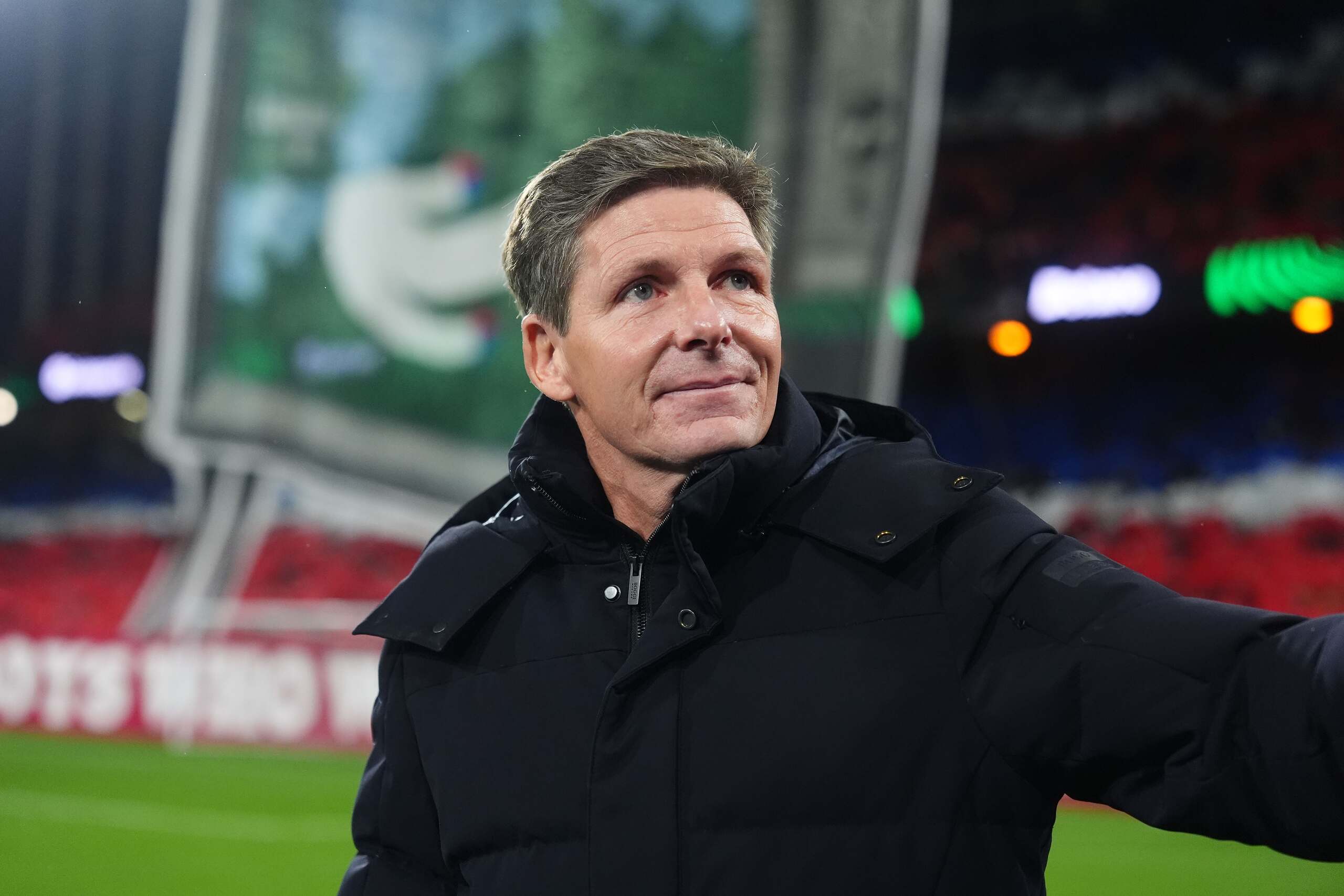
There appears to be significantly greater resistance and skepticism concerning the notion of managers systematically advancing through the professional hierarchy in a similar fashion.
Managers are, regrettably, much more susceptible to being rigidly categorized. They are often labeled as unsuitable for a major club, or designated as ‘firefighters’ adept at crisis management, or perhaps seen as tenacious underdogs, scrappers, or disruptors capable of upsetting bigger teams, yet somehow lacking the precise qualities deemed essential for leading truly elite organizations.
This prevalent perception is unfortunately often reinforced by actual outcomes when such managers are indeed afforded opportunities at more prominent clubs.
David Moyes stands as perhaps the archetypal and most undeniable illustration of this recurring pattern, but we have also observed it with figures like Graham Potter and Nuno Espirito Santo, and even recently with discussions around Thomas Frank, whose perceived focus may currently deter him from immediate consideration for the most coveted managerial roles at the highest level.
Yet, the impact Oliver Glasner has made at Crystal Palace feels subtly but significantly different. His achievements have resonated more like the command and success typically associated with an elite manager, simply operating within a less historically prominent setting.
There is a palpable absence of the ‘plucky underdog’ narrative surrounding Glasner and Crystal Palace compared to the inevitable comparisons drawn with those other managers and clubs.
Instead, his tenure exudes a sense of established authority and a strategic approach more akin to a top-tier appointment.
This perspective is further substantiated by Glasner’s conspicuously ambitious critiques concerning Crystal Palace’s player acquisitions over the recent summer period, articulated after another notable setback following their continental fixtures this past weekend.
He has emphatically conveyed his dissatisfaction with merely participating; indeed, he was prepared to tender his resignation should the transfer of star defender Marc Guehi have been approved during the closing stages of the transfer window.
The prevailing impression is that Glasner’s eventual departure from Palace, whenever it materializes, will be directed towards an elite footballing institution, carrying with it a considerably elevated probability of achieving significant success.
From Crystal Palace’s perspective, the actualization of these projections holds far greater weight than the precise timing of when the unavoidable realities of football’s hierarchical structure ultimately manifest.
Should Crystal Palace find themselves in the position of needing to identify a new manager because Glasner has transitioned to lead one of the world’s preeminent clubs, it would undeniably open up a wealth of prospects for them to once again secure a highly successful appointment of their own.

Furthermore, the greater the triumphs Glasner experiences in that subsequent role, whenever it occurs, the more advantageous it ultimately becomes for Crystal Palace themselves.
We have previously discussed how almost all clubs, save for a minuscule fraction operating under truly extraordinary circumstances, inherently function as talent-exporting organizations, and that there should be no adverse perception or stigma attached to this reality.
This very principle applies with equal force to the concept of a club serving as a developmental stepping-stone for personnel.
A greater number of football clubs should wholeheartedly embrace and strategically leverage this insightful concept.
It is virtually inconceivable that Brighton & Hove Albion would engage in discussions with any potential new recruit without tactfully, yet unmistakably, referencing the successful trajectories of former stars such as Moises Caicedo and Alexis Mac Allister. And, quite justifiably so, this is an entirely valid tactic.
Similarly, AFC Bournemouth finds itself in an analogous advantageous position, as does Crystal Palace Football Club when it pertains to attracting and securing talented athletes.
However, the landscape shifts considerably, presenting a more arduous challenge when this strategy is applied to managerial appointments.
Not every individual can emulate the exceptional trajectory of a Vincent Kompany, whose tenure at Burnley remarkably showcased qualities compelling enough to persuade a titan like Bayern Munich that he was their ideal candidate.
The vast majority of football managers, therefore, require an intermediate opportunity, a crucial stepping stone situated strategically between the pinnacle of an elite superclub and the depths of a club struggling against imminent relegation.
Oliver Glasner’s burgeoning success at Crystal Palace possesses every potential to evolve into a dual triumph for the Eagles, even subsequent to his eventual departure.
His tenure offers a quintessential illustration of the promising future prospects for other managerial candidates considering the club.
Consequently, it becomes unequivocally imperative that the club refrains from any profoundly imprudent actions, such as permitting him to engage in discussions with a rival like Tottenham Hotspur, particularly when Frank’s team faces both tangible repercussions and social mockery following their recent defeat to Brentford.
Such a premature and ill-advised departure would undoubtedly jeopardize the entire strategic foundation and undermine all carefully laid plans.